
Doubles starts with a conversation
Agree a few useful words before the first point.
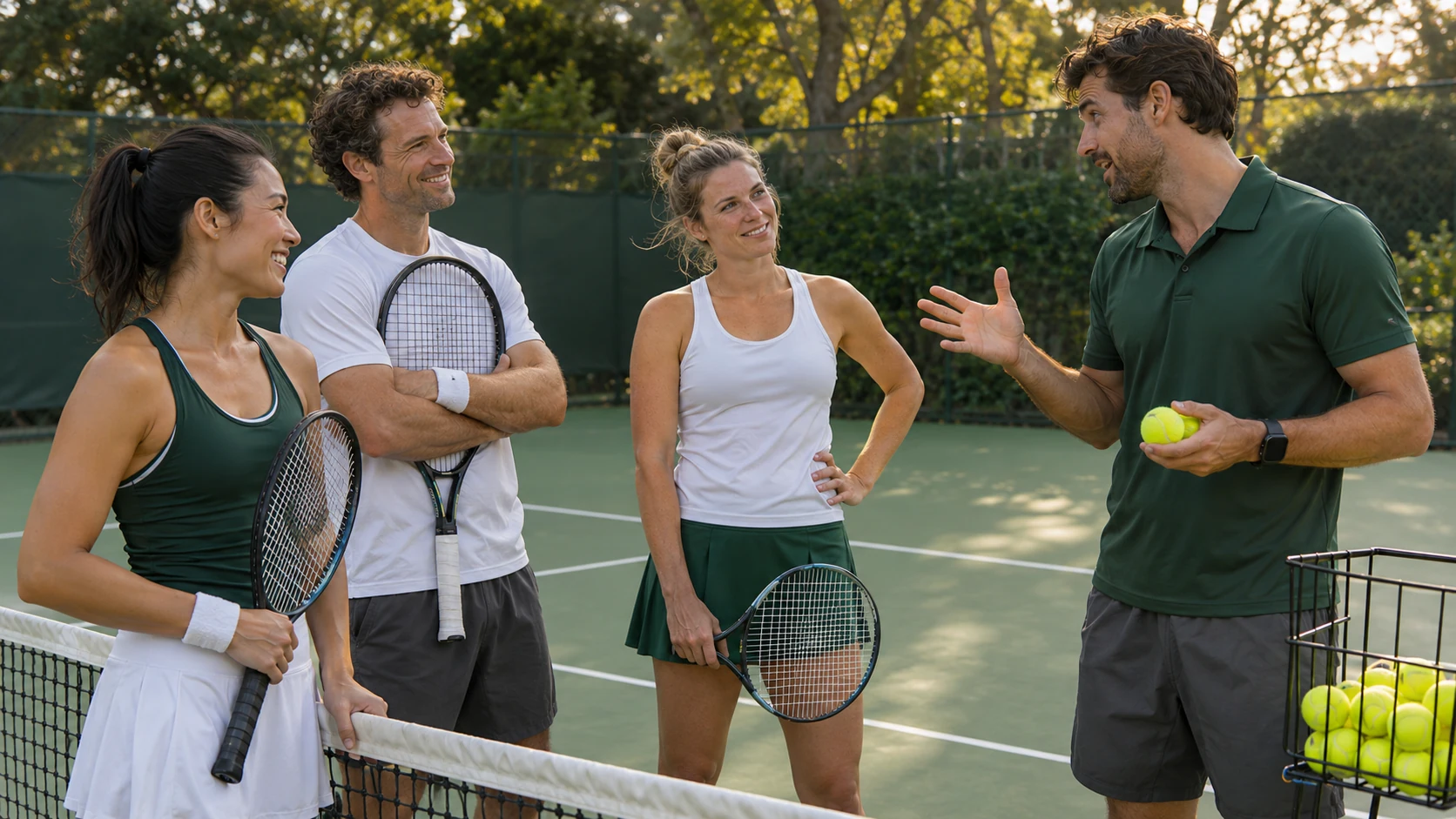
Two players can arrive at the same court with different expectations. One may want a relaxed social hit, while the other hopes to explore a match-play situation. A short conversation before playing gives both people a chance to explain what they want from the session.
You do not need an elaborate tactical system to begin. Start with a shared purpose and a few words you both understand.
Agree what kind of session this is
Ask whether the focus is cooperative practice, a friendly game or preparation for a particular playing situation. Clarifying the purpose makes it easier to choose an activity and decide what feedback would be useful.
If experience levels differ, talk about a format that allows both players to participate. You can revisit the arrangement after trying it rather than expecting the first choice to suit everyone.
Use words you both understand
Discuss simple calls for shared situations before they become hurried decisions. Ask what your partner already uses and whether any words could be confusing. The point is to agree a meaning, not to invent a long vocabulary.
Communication also includes how you respond when a plan does not work. A neutral description of the situation can keep the conversation focused on the next decision.
Talk between points
A pause is a chance to share one useful observation. Keep it specific and brief. You might describe where you felt unsure, ask what your partner saw, or agree one idea to try on the next point.
- What were we each expecting?
- Which decision felt unclear?
- What is one simple thing we want to try next?
Give your partner room to answer. Feedback is more useful when it becomes a conversation rather than a running commentary on someone else’s play.
Review the partnership, not only the score
After a practice game, ask whether your shared purpose remained clear. Did both players get a chance to explore the activity? Were the agreed calls understandable? Is there a situation you would like a coach to help you examine?
The score may be part of the experience, but it is not the only information a session can offer. A useful reflection can identify a better question for your next time on court.
This is an original general-interest article for fictional Baseline Motion Tennis. It does not describe real players, results or an active coaching service.